A Wakad Housing Society Found Out Its Neighbour Was a Warehouse. Pune Has 293 of Them Now.
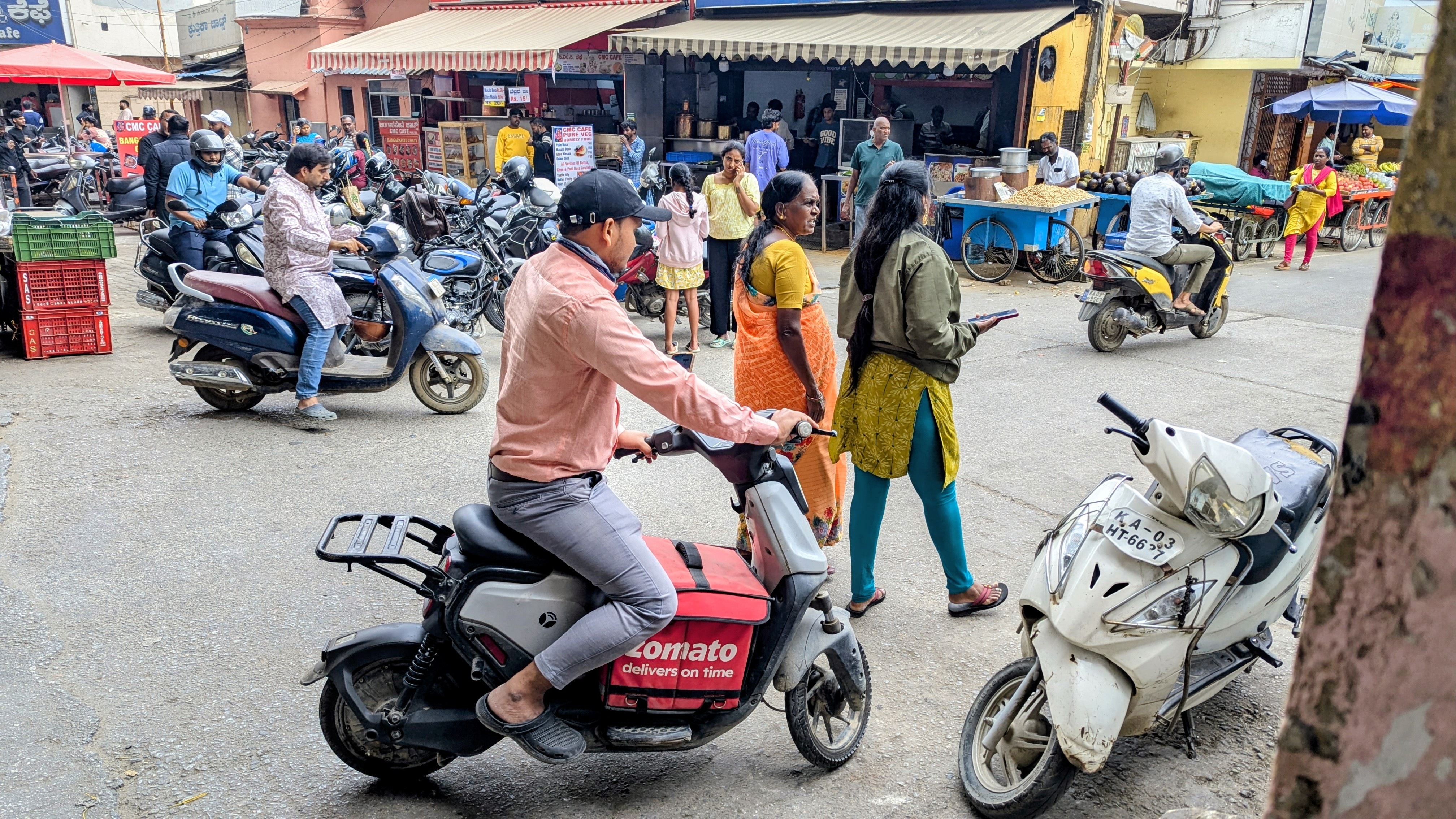
Residents of Sucasa Society on Wakad's Datta Mandir Road didn't set out to pick a fight with a quick-commerce platform. They just wanted delivery scooters to stop cutting through their own compound.
In May 2026, the society's secretary went public with a complaint that had been building for months: the Zepto warehouse next door - what the industry calls a "dark store," a small, windowless fulfilment centre that exists only to get a ten-minute grocery order out the door, never to be walked into by a customer - had no separate access road of its own. So delivery staff used the society's. Repeatedly. The secretary also alleged that a stretch of the compound's security wall had been demolished to make room for the warehouse's own operations. More than 200 residents responded the only way an individual householder can respond to a company this size: they deleted the app.
It's a small, specific, almost parochial dispute. It's also a preview of a problem that's about to get much bigger, because Sucasa Society isn't an outlier - it's sitting next to one of 293 dark stores CLSA's analysts counted across Pune as of August 2026, more than any Indian city they tracked except Kolkata, which came in at 248. A dark store is built for exactly one purpose: minimise the distance between an order placed on a phone and a rider pulling up on a bike, ideally in under ten minutes. Nobody zones a neighbourhood for that. It gets inserted into whatever building has space, loading access or not - and the loading access becomes somebody else's driveway.
Nobody seems to have actually sat down and worked out what a city carrying 293 of these warehouses looks like at street level. Try the arithmetic yourself: even a conservative 150-200 orders a day per store, each one requiring its own rider making its own one-item trip, puts something in the range of 45,000-60,000 individual delivery runs moving through Pune's residential lanes every single day from quick commerce alone - before counting food delivery, which runs through many of the same riders and the same roads. To be upfront: that range is an extrapolation from national-scale figures, not a number anyone has actually published for Pune specifically. Blinkit alone was running close to 2,243 active dark stores nationally as of March 2026, with Zepto and Swiggy Instamart each above 1,100. Nobody seems to be measuring the local, street-level version of that number - which is itself part of the point.
What's measurable, locally, is the friction. In August 2026, Zepto riders at the company's Viman Nagar hub went on strike over working conditions, filing a written complaint to the FDA, the Labour Commissioner and a gig-workers' union citing hygiene and safety concerns, with some rider IDs allegedly blocked afterward. Around the same time, Maharashtra's FDA shut down a Blinkit dark store in Baner-Balewadi - not over traffic, but because it was operating without a food licence under conditions inspectors flagged as unhygienic. And more than once, Pune's own delivery riders have ended up the subject of viral videos, caught riding the wrong way down a one-way lane, visibly racing a countdown clock that Indian regulators have, since January 2026, started asking platforms to stop advertising altogether, after a wave of rider-safety complaints nationally.
These aren't really separate stories. A dark store packed into a residential pocket with no proper access road, a rider under pressure to beat a ten-minute promise, and a platform racing to open store #294 before a competitor does - that's one system, not three. The Wakad protest is just the version of it that became visible, because a housing society had a WhatsApp group and a reason to use it.
Here's the part that's genuinely strange once you sit with it: almost nobody on either side of this actually wants what's happening right now. Residents don't want fifteen individual scooters idling at their gate every evening. Riders don't want to be racing a clock down a one-way street. Platforms don't actually want fifteen half-full bike trips covering the same half-kilometre radius when three or four consolidated runs would deliver the same orders, just a few minutes slower - they just don't have a mechanism to do anything else, because the entire quick-commerce model is built around one rider, one order, as fast as physically possible.
That's precisely the gap parcel-sharing is built for - though it's worth being specific about which gap, because it isn't the one most carpooling conversations are about. Parcel-sharing started out solving a different problem entirely: the cost of moving something between cities, where a traveller already making the trip can carry a parcel for a fraction of a courier's price. A dark store in Wakad isn't that problem. It isn't about distance - it's about density: dozens of tiny, single-item trips converging on the same few streets within the same few minutes, all day, every day. The fix for density isn't a faster rider. It's fewer, fuller trips covering the same ground - the same logic that already makes a shared ride make sense for people, just applied one size down, to the grocery bag instead of the passenger seat.
Nobody is going to out-build 293 warehouses' worth of redundant delivery trips by regulating one housing society's driveway at a time. But every one of those trips started as somebody deciding they needed one specific thing, right now, badly enough to accept a scooter cutting through a neighbour's compound to get it there. That's a decision made one order at a time - which means it can also get un-made one order at a time, the same way carpooling chips away at single-occupancy car trips: not by banning anything, just by making the shared version of the trip the easier one to choose.
Ready to try GoVia?
Share rides, join bike pools, and send parcels with trusted travelers near you.
Download the GoVia app