63,000 Tanker Trips in One Month. Five of Them Ended in a Fatal Crash.
Start with the number, because it's the whole story in one line: Pune's water tankers were on track to make roughly 63,000 trips in April 2026 alone. That's not a typo and it's not a yearly figure - it's one month, driven by summer heat, a growing population, and gaps in municipal pipeline supply that tankers exist to paper over.
Now put a second number next to it. The same month, Pune and Pimpri-Chinchwad recorded five fatal tanker crashes. One victim died in Ravet. Another died in Wanowrie - the second tanker fatality in the city within 48 hours, according to local reporting at the time.
Those two numbers aren't a coincidence sitting next to each other. They're cause and effect. A city running 60,000-plus tanker trips a month isn't occasionally sending a water truck down a residential lane - it's running what amounts to a parallel, informal transport network, on roads and in gullies that were never designed to carry regular heavy-vehicle traffic. The crash numbers are what that volume looks like once it meets Pune's actual streets.
Where it's worst, and why it keeps happening
South and southwest Pune carry a lot of this load - Katraj, Bibwewadi, Kirkatwadi, and Ambegaon are among the localities that show up repeatedly in shortage reporting, areas where piped municipal supply hasn't kept pace with how fast the neighbourhoods around them have grown. Residents in south Pune have gone further than complaining about scarcity itself; they've staged protests specifically over tanker movement and rates, using the term "tanker mafia" to describe what they say is an unregulated, overpriced private supply chain filling a gap the city's own pipes should be covering. Pune's mayor has said the civic body will take the matter of soaring tanker rates up with the District Collector - an acknowledgment that this isn't only a traffic and safety issue, it's a pricing one too.
What doesn't show up in any of this reporting is a plan to reduce the number of trips. The interventions on the table - mayoral pressure on tanker rates, calls for stricter tanker-mafia enforcement - are about who profits from 63,000 monthly trips and how much they charge, not about why a city of Pune's size still needs that many truck movements to deliver something a pipe network is supposed to handle on its own.
The part a carpool can't fix, and the part it can
Nobody's claiming shared rides solve a municipal water-supply gap. That's an infrastructure problem, and it needs an infrastructure fix - more pipeline coverage, not more carpooling.
But the logic underneath tanker demand is worth sitting with for a second, because it's the same logic GoVia runs on. A tanker exists because one vehicle moving in bulk is more efficient than a hundred separate households each solving their own water problem. Nobody designed Pune's roads for 63,000 extra heavy-vehicle trips a month any more than they designed Hinjewadi's lanes for every IT employee driving to work alone. The tanker crisis isn't an argument for carpooling. It's a reminder of what happens to a city's streets when a basic need gets solved one vehicle at a time, at a scale the roads were never built to carry - and a small case for why a commute, at least, doesn't have to go the same way.
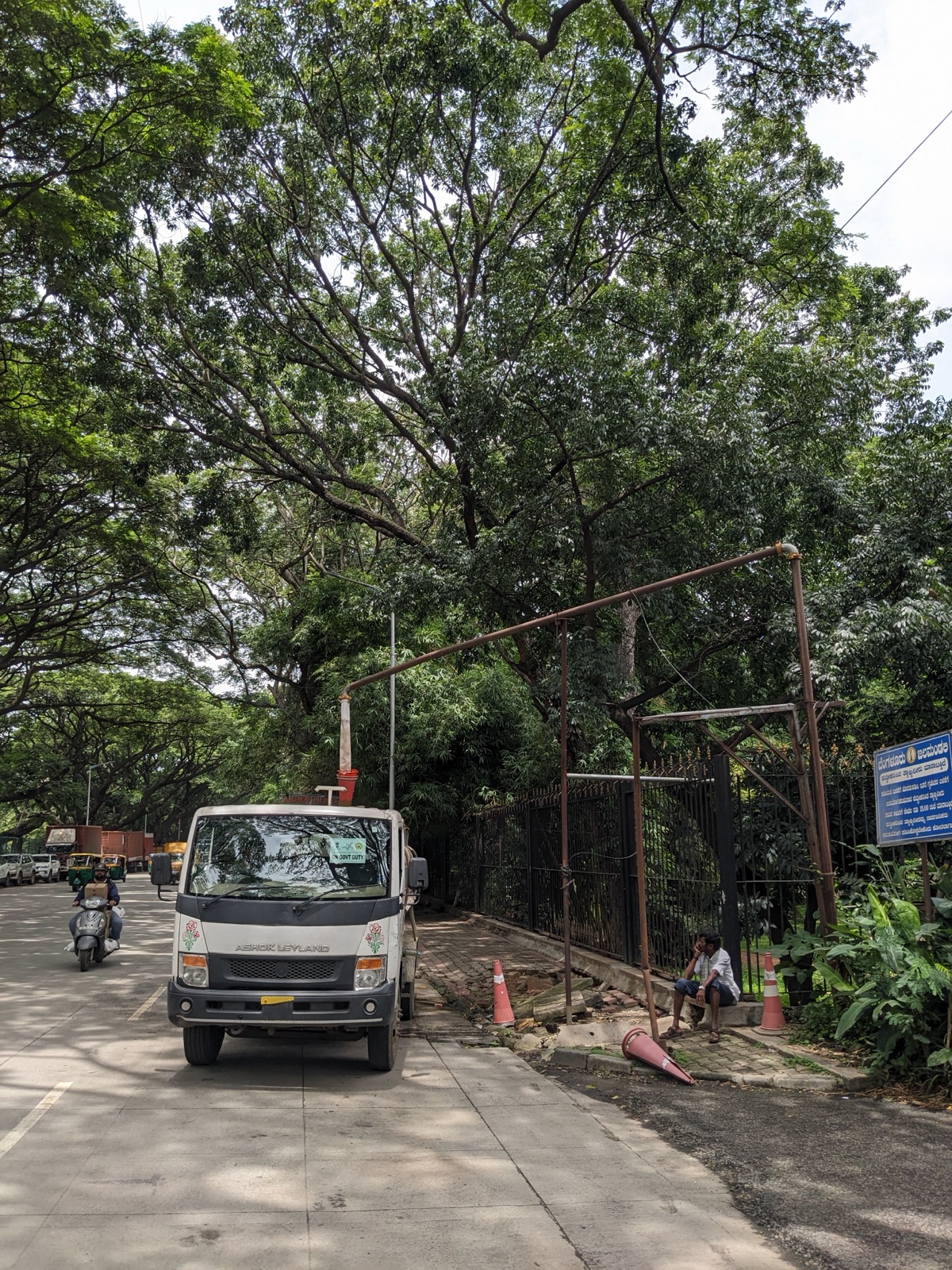
Cover photo: Water tanker refilling in Bengaluru, by Saiphani02 / Wikimedia Commons, CC BY-SA 4.0.
Ready to try GoVia?
Share rides, join bike pools, and send parcels with trusted travelers near you.
Download the GoVia app