2 Minutes, 48 Seconds, 50 Metres: Pune's Ambulance Problem Isn't One Video. It's a Pattern.
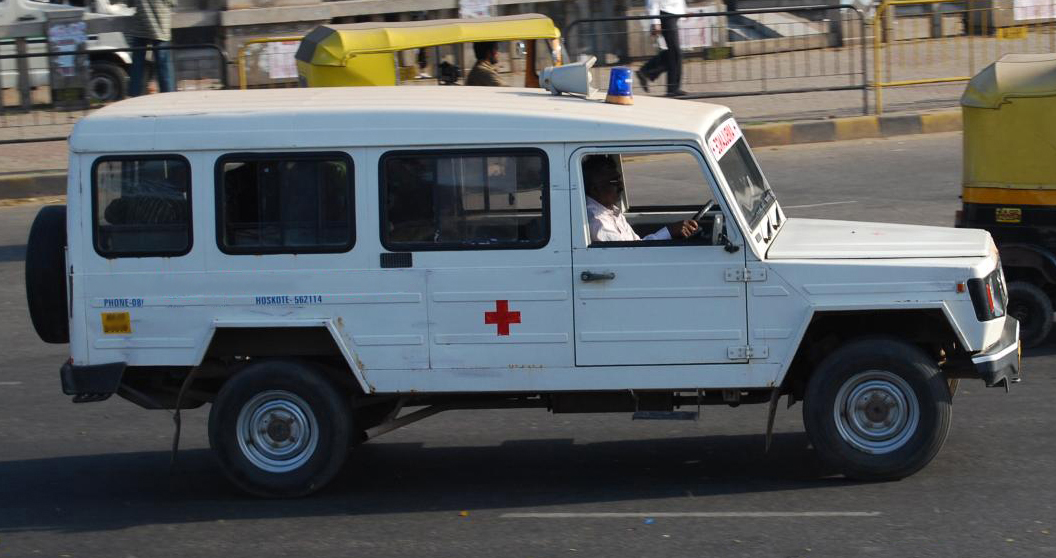
Two minutes and forty-eight seconds. That's how long a video circulating out of Hadapsar showed an ambulance taking to cover fifty metres - stuck bumper to bumper with everything else on the road. No crash blocking the lane, no VIP convoy, no special event. Just an ordinary stretch of road doing what Pune roads do at the wrong hour, with a patient inside.
If that were the only video, it would be a bad day for one family. It isn't the only video.
A pattern, not an incident
Pull the clips together and a shape starts to show.
On July 22, 2026, heavy monsoon rain flooded the Ramtekadi-Fatima Nagar stretch. An ambulance already on its way got swallowed into the resulting gridlock along with everyone else trying to get through - caught on camera, same as Hadapsar.
Sinhagad Road has produced its own ambulance-stuck footage more than once, including an incident dated back to November 2025 - a year before this one - and more since, some of it after a brand-new flyover opened on that exact corridor specifically to relieve the congestion. Residents told reporters the jam didn't disappear; it just moved a few hundred metres down to the next signal.
The starkest one is from Gultekdi Market Yard. On October 20, 2026, a porter collapsed on the job. A doctor running a health camp on site called for an ambulance. By the market committee's own account, it never reached him in time. A second ambulance then had to be summoned just to move his body - the whole delay ran close to three hours. The market committee's director has since asked the administration for a dedicated ambulance stationed at the market itself. The reason the request landed with extra weight: a different porter died the same way, at the same market, in October 2025 - one year to the month earlier.
What the people who actually drive ambulances are saying
Gopal Jambe, secretary of the Pune District Ambulance Association, told Hindustan Times that a 10-kilometre run now takes roughly an hour even with lights and sirens on, against 30 to 40 minutes "previously." That's his own sense of how much worse it's gotten, by his own comparison, not a dated or independently measured benchmark - worth being honest about rather than dressing it up as a study. But it's the assessment of someone who does this for a living, and it lines up with what the videos keep showing.
Ruby Hall Clinic didn't wait for the roads to get better. It launched a First Responder Bike Ambulance programme - GPS-equipped motorcycles that can filter through a jam a four-wheeler ambulance physically can't, reaching a patient first and buying time before the real ambulance arrives. It's a real adaptation, and also a quiet admission: a major Pune hospital network has concluded that getting an ambulance there by road, on time, can no longer be assumed - so it built a workaround instead of waiting for one.
The city's own ambulance association has a standing ask that hasn't moved: dedicated ambulance lanes, the same idea cities elsewhere use to keep at least one lane clear for exactly this. No timeline has been attached to it.
A different kind of traffic problem
Every other story about Pune traffic is, underneath it, a story about time - minutes added to a commute, a Friday evening that starts later than planned. Two minutes and forty-eight seconds for fifty metres isn't a story about somebody's evening. It's a story about whether a specific stretch of road, at a specific hour, is actually passable in an emergency. Right now, in enough places, the honest answer is that it depends on luck.
There's a connection to carpooling here, worth saying plainly and only once: the traffic volume an ambulance has to cut through on any given road is made up overwhelmingly of private vehicles carrying one person each. A ride that gets shared instead of driven twice isn't just one less car hunting for parking or five minutes saved on someone's commute - on a day like the ones above, it's one fewer vehicle sitting between an ambulance and the person waiting for it. That's not a reason to carpool for comfort. It's a reason the sheer number of vehicles on a road deserves to be treated as a safety number, not only a commuting one.
Photo: "Tempo Trax ambulance" by Peter Richmond, via Wikimedia Commons, CC BY 2.0 (cropped).

Ready to try GoVia?
Share rides, join bike pools, and send parcels with trusted travelers near you.
Download the GoVia app