Pune Airportair cargoparcel sharinglogisticsPune infrastructure
Pune Airport Moved 45,000 Tonnes of Cargo in Eight Months. Its Dedicated Cargo Terminal Is Still Five Acres on a Plan.
GoVia Team · 16 Nov 2026 · 4 min read
<p>Between January and August 2026, Pune Airport moved 45,050.7 metric tonnes of air cargo — up 43.9% from the 31,303.7 tonnes it handled over the same eight months in 2025, according to figures cited by Union Minister of State for Civil Aviation Murlidhar Mohol. That's not a modest uptick. For context: all of 2025, the full twelve months, added up to roughly 49,718 tonnes, itself a 23.8% jump over 2024. Pune's air cargo has gone from growing at about a quarter a year to growing at nearly double that rate — and it got there in two-thirds of the time.</p>
<p>Numbers like that usually get presented as good news, and they are. They're also a warning sign nobody seems to be acting on with matching urgency.</p>
<p>Industry coverage tracking the surge has been blunt about what sustaining it will actually take: more cargo-handling infrastructure, and more freighter or belly-hold capacity on international routes. Pune doesn't really have a dedicated cargo terminal yet — what it has is a plan for one. Reports from 2025 describe roughly five acres set aside next to the airport's new passenger terminal for a “state-of-the-art” cargo facility, with a roughly 600-square-metre terminal building attached to the new Terminal 2 structure, eventually meant to let foreign cargo operators fly in and out of Pune directly. No capacity figure has been published for it. No confirmed opening date exists either, as far as any public reporting goes.</p>
<p>Meanwhile the passenger side already got its moment. Pune's New Integrated Terminal Building began operations in June 2026 (inaugurated back in March), built to handle 90 lakh passengers a year — 3,000 an hour at peak. Five new parking bays are meant to let 20-30 more aircraft use the airport daily. Cargo, which is growing faster than passenger traffic in percentage terms, is still waiting on its own version of that moment.</p>
<p>It's worth putting the daily numbers next to each other too. In June 2025, Pune set what was then described as a record: 144 metric tonnes of cargo in a single 24-hour stretch — 72.73 tonnes inbound, 71.24 outbound. That was treated as a milestone worth its own press release. A year and a bit later, with the airport now averaging somewhere around 5,600 tonnes a month, that “record” day reads less like an outlier and more like an ordinary one. The ceiling that made headlines in 2025 is turning into this year's floor.</p>
<p>None of this growth stays at the airport. Every tonne that lands has to actually get somewhere — a warehouse, a courier hub, a business, eventually someone's doorstep. That's the part of the story that never makes it into a cargo-tonnage press release: the ground-side trip. And right now, the way most of that last leg works is the way it's always worked — one shipment, one vehicle, one dedicated trip, repeated as many times as there are shipments, no matter how small any individual one is or how close together their destinations happen to be. More cargo landing, same roads, same habits.</p>
<p>That's exactly the inefficiency parcel-sharing exists to fix. A courier run, a same-day delivery, even a small business's routine supply pickup doesn't need its own dedicated vehicle making its own dedicated trip if there's already a ride headed the same direction with room to carry it. GoVia's parcel-sharing model is built around precisely that substitution — letting a shipment ride along an existing trip instead of generating a brand-new one. When the volume arriving at one single point is growing 44% in eight months and the dedicated ground infrastructure meant to move it onward is still a land allocation and a floor plan, the smarter lever isn't always “build faster.” Sometimes it's “stop sending every parcel in its own vehicle” — a lever that's available today, on the roads and in the vehicles Pune already has, while those five acres next to Terminal 2 slowly turn into an actual building.</p>
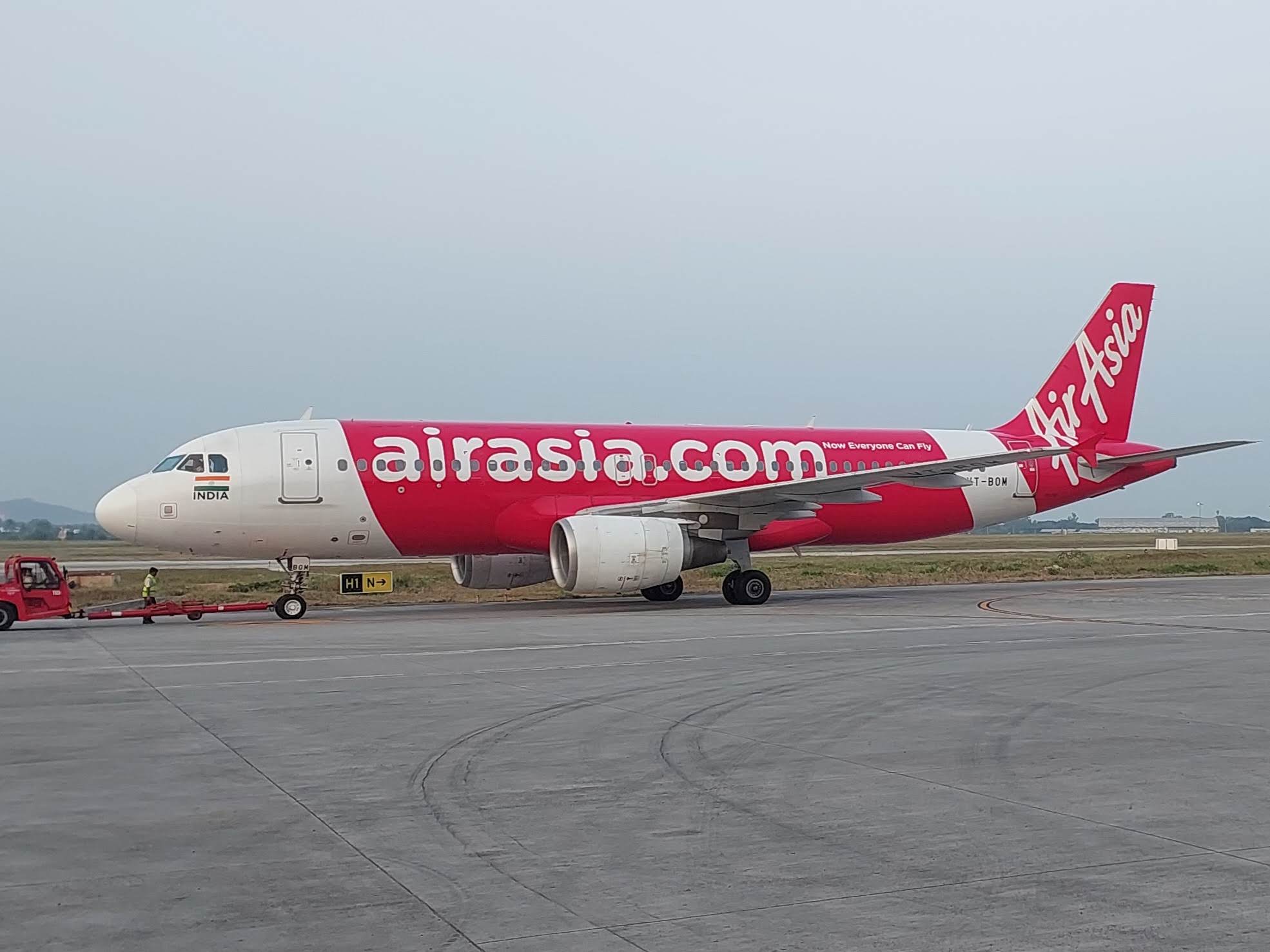
<p><em>Photo: AirAsia Airbus A320 at Pune Airport, by Abhijitsathe via Wikimedia Commons (CC BY-SA 4.0).</em></p>
Ready to try GoVia?
Share rides, join bike pools, and send parcels with trusted travelers near you.
Download the GoVia app