Pune Is Adding 1,300 Vehicles a Day. Its New Plan Fixes 30 Junctions.
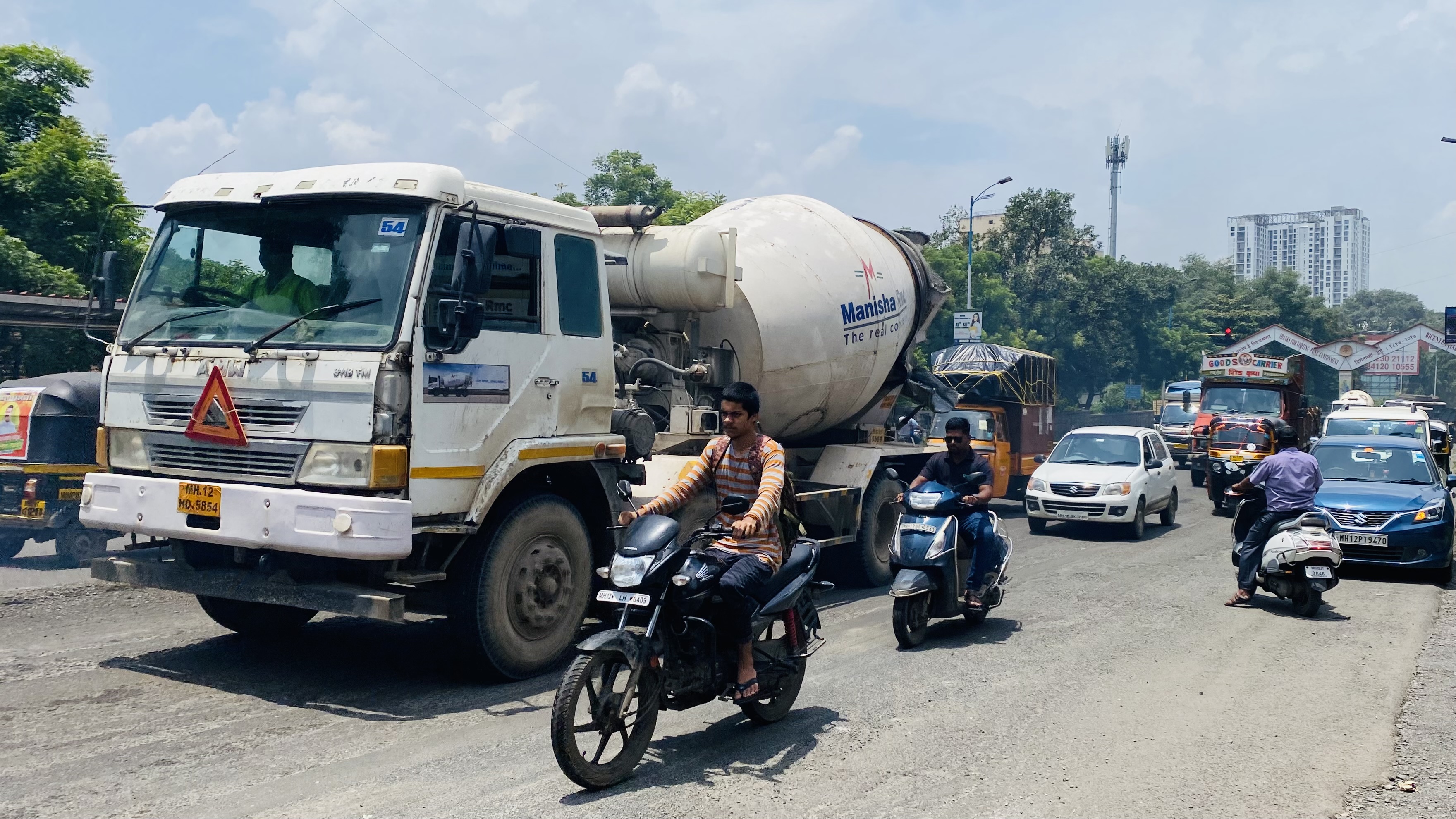
Start with one number from Pune Traffic Police's own presentation, reported by Punekar News in August 2026: the city's vehicle population went from 52 lakh in 2018 to 81 lakh in 2026. That's 29 lakh vehicles added in eight years. Divide it out and you get roughly 993 vehicles a day, averaged over the whole period.
But the number the police are actually quoting right now isn't 993. It's 1,300 vehicles a day. Which means the daily rate has climbed about 31% above its own eight-year average - Pune isn't just adding vehicles, it's adding them faster than it used to. The growth curve is bending upward, not holding steady.
Against that, here's the fix. The same presentation sets a short-term target of lifting the city's average traffic speed from about 22.5 kmph to somewhere between 26 and 30 kmph. A Punekar News report from December 2025 had that speed at 19.5 kmph the year before - so it has genuinely improved, by a real amount, which is worth saying plainly instead of only reaching for bad news. The plan to push it further rests on 30 priority junctions shortlisted for flyovers or grade separators, ranked by traffic volume, congestion alerts and road width.
Thirty junctions. One thousand three hundred vehicles a day, every day, with no planned junction for most of them to drive through.
How big is the gap, really? Reports don't even agree on how many junctions actually need fixing in the first place - one count puts severely congested junctions at 65, more than double the 30 getting attention; another framing puts the number of most-congested junctions at 90, with 35 queued for work. Whichever figure you use, the junction list is shorter than the junction problem, and the junction problem is smaller than the vehicle problem. A flyover is also a one-time jump in capacity at a single point. The 1,300-a-day figure doesn't pause while that flyover gets built - it keeps compounding on every road the flyover doesn't touch.
This isn't Pune's first attempt at this kind of plan, either. Between 1981 and 2009, the Pune Municipal Corporation drew up 23 separate traffic-related plans - cycle networks, parking plans, a detailed 2008 traffic plan - and by most tellings, only one of them, the Metro, actually became a major infrastructure project that got built. The current real-time data study the city has now commissioned is, by that count, roughly attempt number 24. That's not cited to mock the effort - targeted junction fixes and better signal timing do measurably help, and should keep happening - it's cited because it's the actual track record this new 1,300-a-day number is up against.
Here's the part that's easy to miss if you only think about this as a road-building problem: every one of those 23 plans, and the 30-junction one now, is a supply-side fix. More lanes, more flyovers, more capacity for vehicles to use. Not one of them touches the number on the other side of the equation - how many vehicles are actually on the road making the trip in the first place.
That's the only thing that's structurally different about carpooling versus literally everything else in this conversation. A new junction adds capacity for more cars. A shared ride is the one action that removes a car from the road instead of making room for one more. If two people who'd otherwise drive separately share one trip, that's one fewer vehicle contributing to tomorrow's count - not a smaller contribution to it, an actual subtraction from it. Pune can keep building toward 30, 65, or 90 fixed junctions. It can't build its way out of 1,300 new vehicles a day. But every shared trip is doing something a flyover structurally cannot: shrinking the number this entire plan is trying to outrun.
Photo: Ganesh Dhamodkar/Wikimedia Commons (CC BY 4.0).
Ready to try GoVia?
Share rides, join bike pools, and send parcels with trusted travelers near you.
Download the GoVia app