Pune's Electric Buses Run Fine All Morning. The Afternoon Is a Different Story.
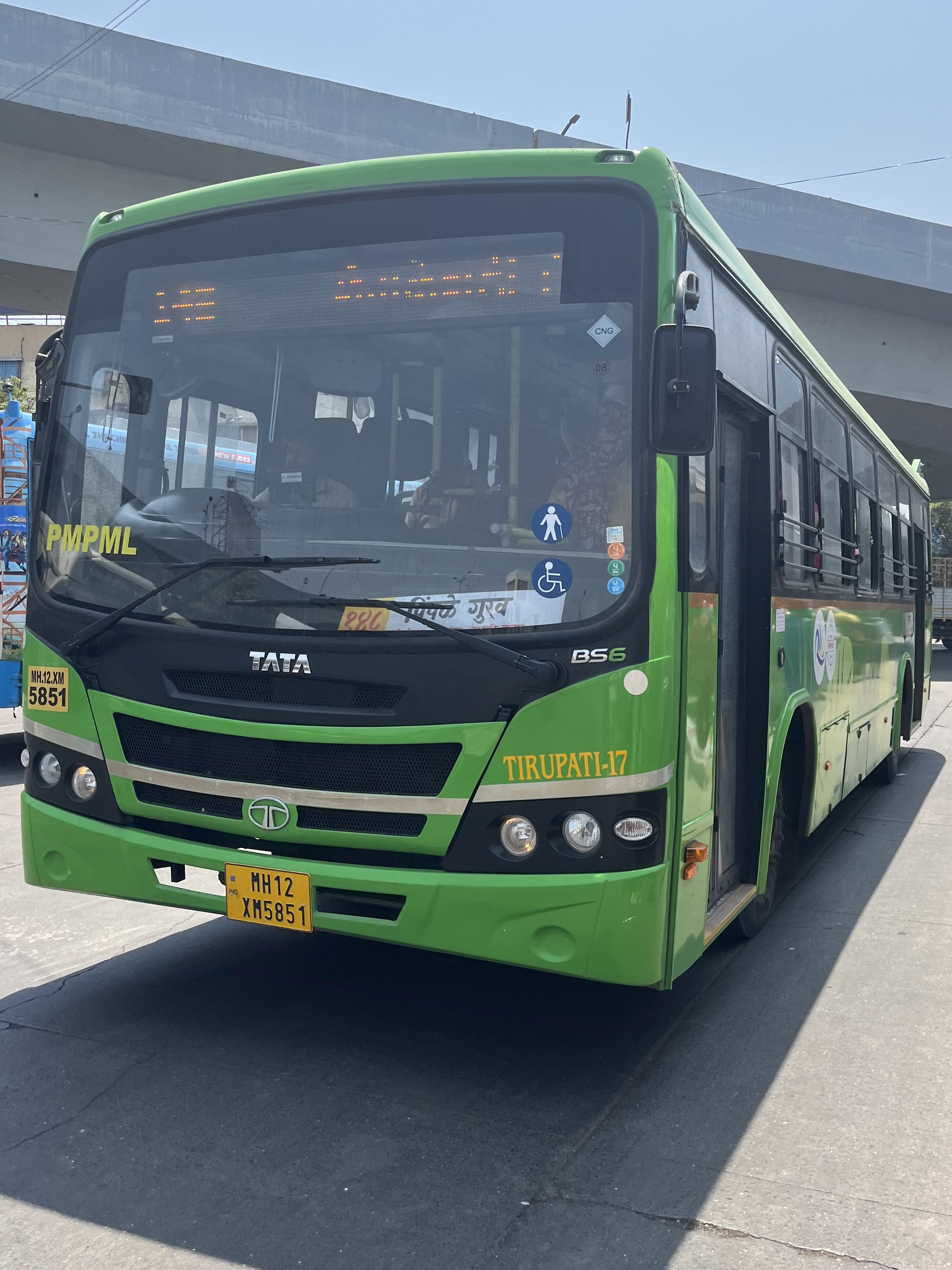
A fully charged electric bus leaving PMPML's Bhekrai Nagar depot at 6 am can cover roughly 110 to 115 kilometres before its battery needs attention again. For a city route, that's normally enough to get a bus through most of a working day. The problem Pune's transit utility has run into isn't the morning. It's everything after lunch.
According to recent Bridge Chronicle reporting, PMPML has started converting roughly a quarter of the electric buses at its Bhekrai Nagar depot to run on CNG instead — not scrapping electrification, but deliberately pulling a slice of the fleet back to a familiar fuel to patch a gap the charging network can't close yet. The mechanism is straightforward once you see it: a morning charge gets a bus through its first shift fine, but by afternoon the battery has drained enough that getting the bus back to the depot for a recharge — and back out again before its next assigned run — isn't guaranteed. When it doesn't work, the result isn't a clean end-of-shift handover. It's a bus stopping somewhere mid-route, which is exactly the kind of breakdown PMPML is trying to prevent, not cause, by going electric in the first place.
PMPML's own response is specific and modest, not a retreat. The plan, per the same reporting: a 45-minute midday charging window at Bhekrai Nagar, and 25% of that depot's electric buses reassigned to CNG so the charging infrastructure only has to cover three-quarters of the fleet's afternoon demand instead of all of it. PMPML intends to extend the identical pattern — partial CNG conversion plus a midday charging slot — to the Baner and Nigdi depots too, rather than treat Bhekrai Nagar as a one-off fix.
It's worth being precise about what this is and isn't. This isn't PMPML abandoning electric buses — it's accepting that a depot's charging capacity and a bus's battery range are two separate numbers that don't automatically scale together, and buying time with the mix of fuel sources it already has while the charging side catches up. The same instinct shows up elsewhere in PMPML's recent history: when breakdowns piled up specifically on its double-decker electric bus pilot, PMPML put those plans on hold rather than push through — a different vehicle, same pattern of pausing a specific failure point instead of absorbing it as "electric buses don't work."
The scale of PMPML's underlying reliability problem is worth knowing, with the caveat that most of it has nothing to do with charging at all. Free Press Journal reported close to 40,000 total bus breakdowns — across PMPML's whole fleet, electric and diesel and CNG alike — over a 22-month stretch from January 2024 to October 2025. That's an average running well past one breakdown an hour, every hour, across the network. Charging-related failures on electric buses are a real and growing slice of that number, but they're a slice, not the whole story — PMPML's maintenance backlog is its own separate, bigger problem that would exist even if every bus in the fleet still ran on diesel.
The charging-capacity side has its own slower backstory. PMPML inaugurated dedicated electric-bus depots at Charholi and at Maan near Hinjewadi back on April 25, 2025 — Deputy CM Ajit Pawar did the honours — adding a combined batch of electric buses to the network (reports differ on the exact Charholi/Hinjewadi split, somewhere between 30 and 60 buses each depending on the source, so take the precise number loosely). Even with those depots running for well over a year now, Bhekrai Nagar — an older, already-established electric depot — still can't fully cover its own fleet's afternoon charging demand on its own. Adding real charging capacity at a depot typically means a dedicated high-tension power connection, and that's a grid-approval and construction timeline, not a procurement one — a slower, less visible bottleneck than "buy more chargers," and a good part of why this keeps resurfacing depot by depot instead of getting solved once.
None of this is really a story about whether electric buses work. It's a story about whether the electricity can get to them fast enough, at the times buses actually need it, at every depot that needs it — and right now, at Bhekrai Nagar, it can't quite yet. Until the grid side closes that gap, a route running out of a charging-stressed depot is, practically speaking, a little less reliable than its timetable suggests. And whenever a route gets genuinely unreliable like that, people trying to get somewhere on it start finding their own way around it anyway. That's exactly where a shared ride — or a shared parcel run, timed around when a route is actually running rather than when it's supposed to — quietly earns its keep: not as a replacement for PMPML, but as the thing that still gets you there on the afternoon a bus doesn't show.
Ready to try GoVia?
Share rides, join bike pools, and send parcels with trusted travelers near you.
Download the GoVia app